Canopy Care
Tree Trimming
Tree trimming manages canopy size and clearance and removes deadwood so a tree stays healthy, safe, and in scale with the property.
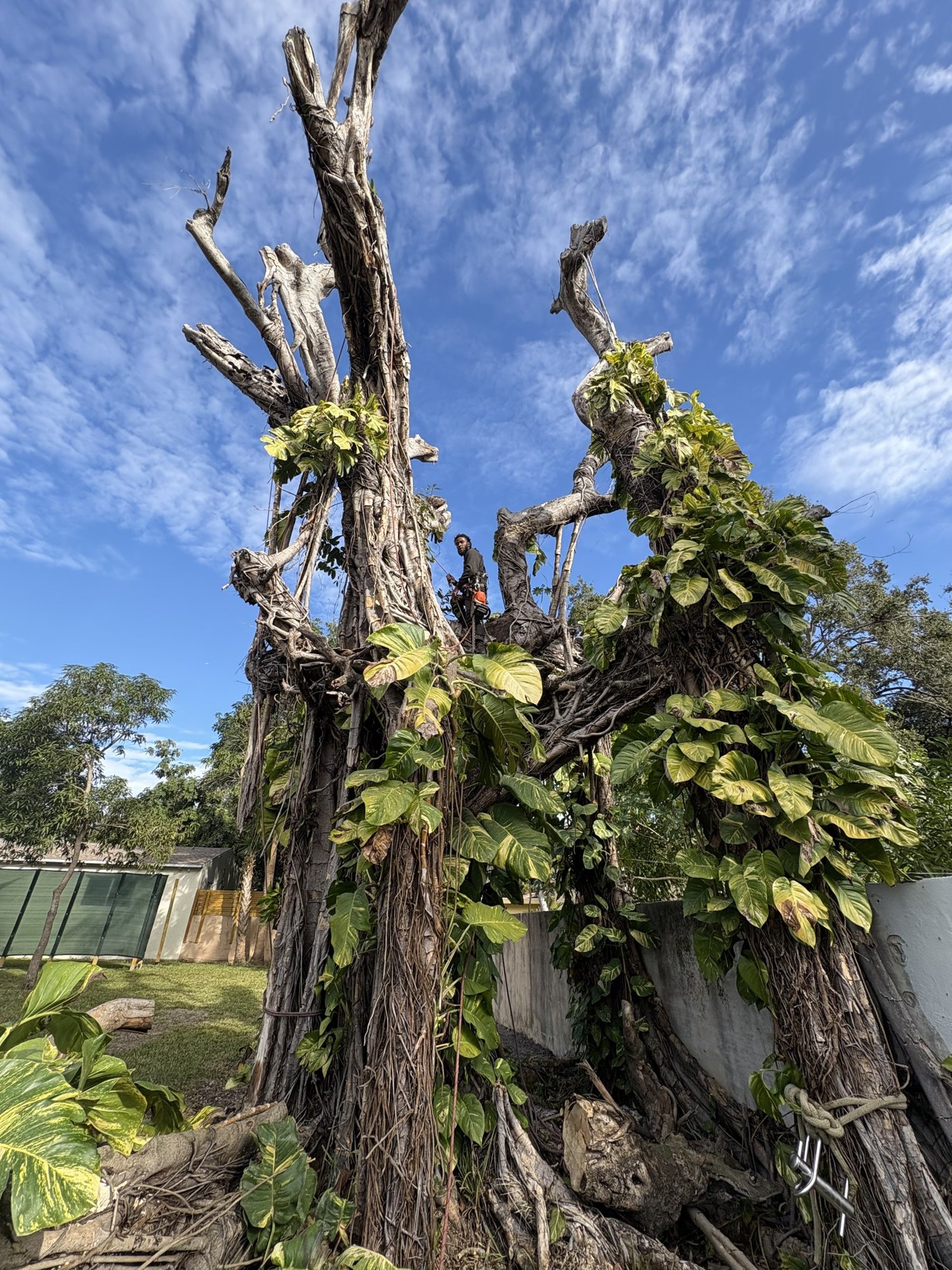
Tree trimming keeps a canopy in good condition between structural prunings. It covers deadwood removal, crown cleaning, clearance from roofs and walkways, and light crown reduction where a tree has outgrown its space.
Done properly, trimming improves light and air movement through the canopy and removes the dead and broken limbs that fail in a storm. Done badly — by topping or over-thinning — it weakens the tree. Subtropical Arborists trims to arboricultural standards, never by rounding a tree back.
01The Process
What to expect, step by step.
- 01
Assess the canopy
The arborist identifies deadwood, hazards, and clearance issues, and confirms what should and should not be cut.
- 02
Targeted cuts
Only the branches that need to go are removed, at proper pruning points, keeping the tree’s natural shape.
- 03
Clean up
All debris is hauled away and the property is left tidy.
A cleaner, safer canopy that keeps its natural shape, with hazards and deadwood removed and clearance restored.
02Questions
About tree trimming.
How often should trees be trimmed?
Most established South Florida shade trees benefit from trimming every one to three years. Palms and fast-growing species may need attention more often. An arborist can set a schedule based on the specific tree.
Can you trim trees near power lines?
Work close to primary power lines is handled by the utility. Subtropical Arborists prunes trees on your property and will advise when a limb near a service line needs utility coordination.
03Related Services
Structural Pruning
Structural pruning trains a tree to grow with one dominant leader and well-spaced branches so it stays sound as it matures.
Tree Removal
Tree removal is the controlled, rigged dismantling of a tree when it is dead, hazardous, or must be cleared, taken down piece by piece to protect everything around it.
Palm Tree Care
Palm care covers proper trimming and removal of palms such as coconut, royal, and sabal, cutting only dead and dying fronds rather than over-pruning.
Free Estimate
Let’s take a look at your trees.
Every quote follows an on-site visit with the certified arborist. Estimates are free, and there is never a price given from photos alone.